
If you’re considering financing a manufactured home in California, you’re likely running into conflicting information. Some sources make it sound impossible. Others oversimplify the process. The truth sits somewhere in the middle , and it depends entirely on your specific situation.
This guide explains the loan options available, what actually matters to lenders, and how different scenarios affect your financing. Whether you’re buying in a park, on your own land, or helping a family member understand their options, this will give you a clear picture of what to expect.
What Counts as a Manufactured Home in California?
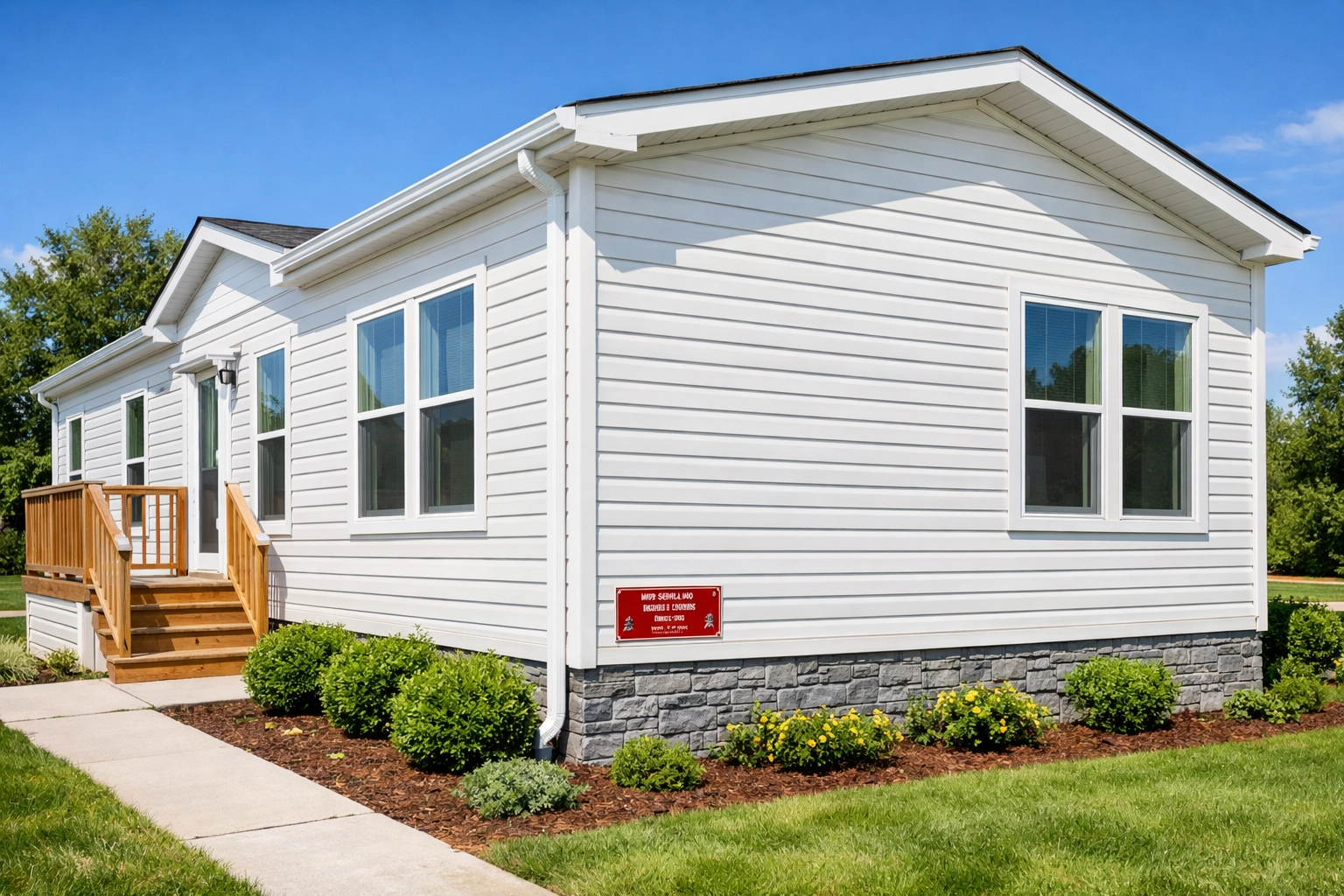
A manufactured home is built entirely in a factory and transported to its location. In California, any manufactured home built after June 15, 1976 meets federal HUD construction standards. These aren’t the mobile homes from the 1960s , modern manufactured homes often exceed the energy efficiency of older site-built houses.
The HUD certification tag (a red label attached to each section) is what distinguishes a manufactured home from a modular or site-built home. Lenders will ask about this tag. If your home was built before 1976 or doesn’t have the HUD tag, most conventional financing won’t be available.
What matters for financing:
- Build date , June 15, 1976 or later opens most loan options
- HUD certification tag , Must be present and verifiable
- Number of sections , Single-wide or multi-section affects loan terms
- Current classification , Registered with DMV or recorded as real property
Two Very Different Scenarios: Park vs Land-Owned
This is where most confusion starts. Whether you own the land under your home changes everything about your loan options, rates, and long-term costs.
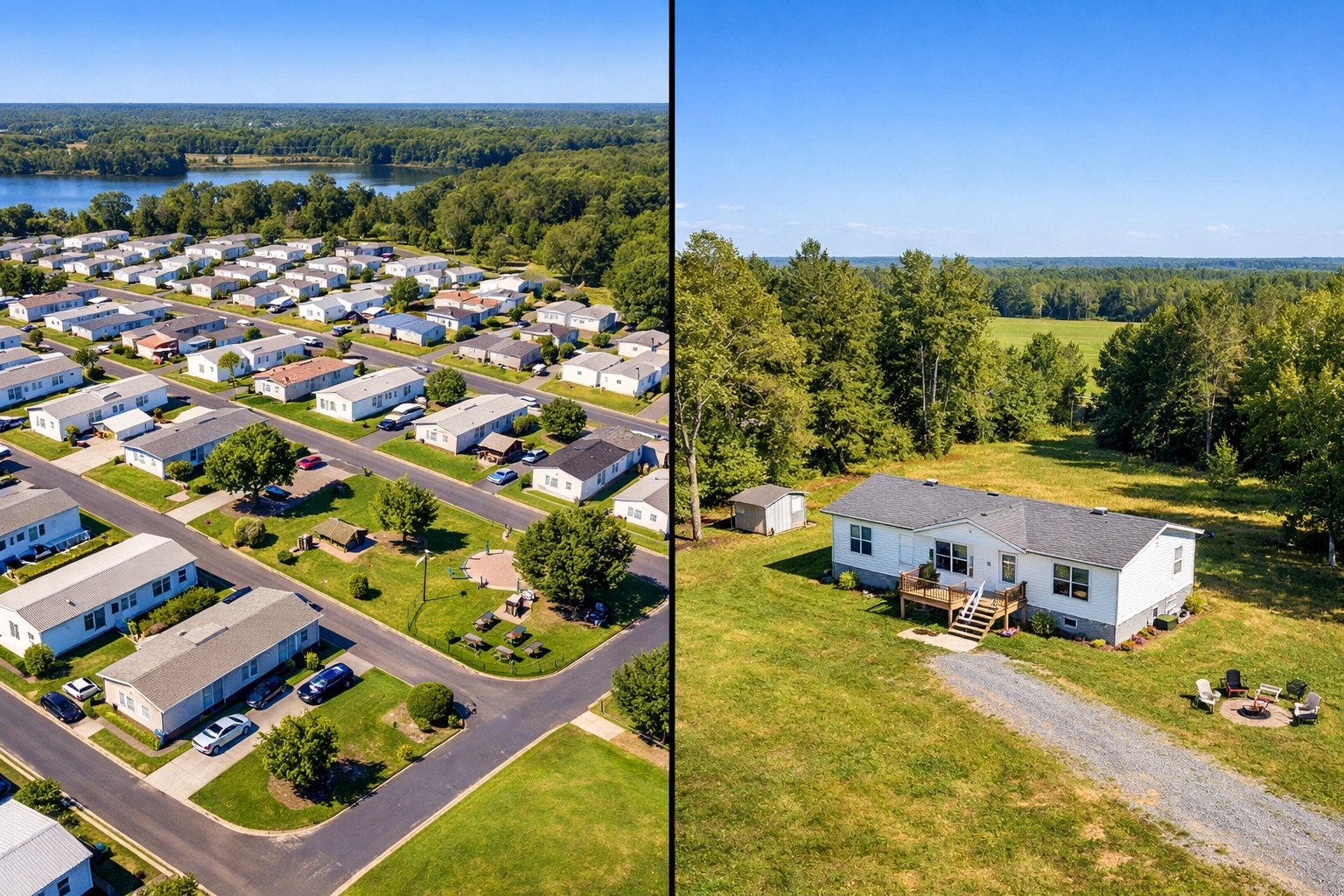
Manufactured homes in parks sit on leased land. You own the home but pay monthly space rent to the park. These homes are typically classified as personal property (like a vehicle) and financed through chattel loans. Because you don’t own the land, traditional mortgage lenders won’t treat it as real estate. Learn more about in-park lending options here.
Land-owned manufactured homes sit on property you own. When properly installed on a permanent foundation, California automatically classifies these as real property. This opens access to traditional mortgage financing with better rates and terms. Explore land-owned financing.
The space rent factor in parks ranges from $500 to over $2,000 per month depending on location. This ongoing cost sits outside your loan payment but affects your total housing expense. With land ownership, you’ll have property taxes instead , typically lower in rural areas, higher near coastal regions.
Loan Types Explained (Plain English)
Chattel loans work like auto loans. The home itself serves as collateral, but there’s no real estate involved. Terms run shorter (15-20 years), rates run higher (often 7-9% in 2026), and down payments typically start around 5-10%. These make sense when buying in a park or when your home doesn’t qualify for mortgage financing.
Mortgage-style loans treat the home and land as real estate. You’ll see 20-30 year terms, rates closer to traditional mortgages (currently 6-7% range), and access to government-backed programs. Requirements are stricter , the home must be on a permanent foundation and meet specific installation standards.
FHA and VA programs offer the most accessible mortgage-style financing. FHA requires as little as 3.5% down with a 580 credit score. VA loans require zero down for qualified veterans. Both programs require the home to be your primary residence and meet foundation certification standards.
What Lenders Actually Look At
Home age matters more than you’d think. While any post-1976 home technically qualifies, lenders often prefer homes built after 1990. Newer homes appraise more reliably and face fewer condition issues. Homes from the 1970s and 1980s can still get financed, but expect closer scrutiny during appraisal.
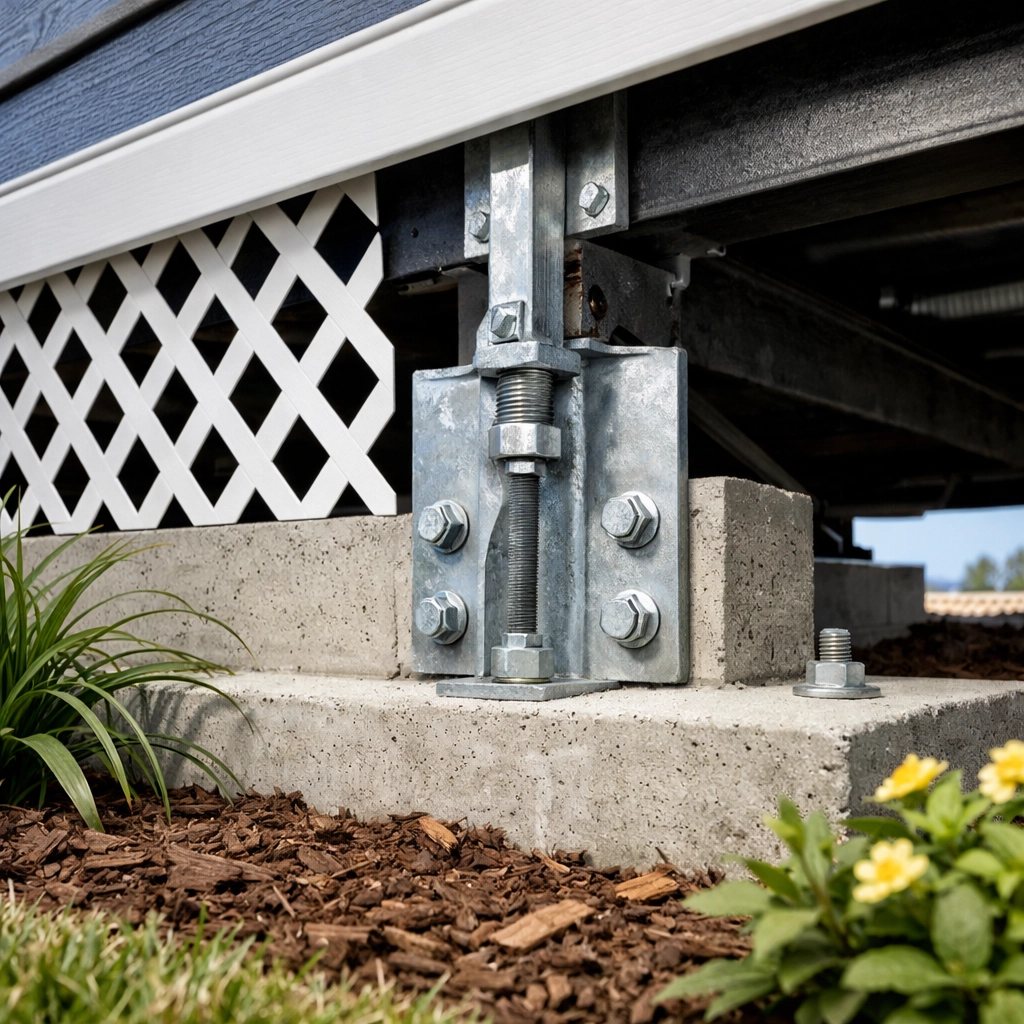
Foundation type determines your loan category. A permanent foundation means the home is anchored to a concrete perimeter with proper footings, engineered to local building codes. Pier-and-beam systems can work if properly certified. Homes on steel chassis without foundation work stay in the chattel category.
California requires foundation certification from a licensed engineer for most mortgage financing. This inspection costs $600-900 and verifies the installation meets HUD requirements and local codes. Without it, you’re limited to chattel financing regardless of how the home looks.
Location affects more than you’d expect. Some lenders won’t finance in certain parks due to park stability concerns, age restrictions, or space rent costs. Rural properties face different appraisal challenges than suburban ones. Flood zones, fire zones, and earthquake zones all add documentation requirements.
Standard underwriting looks at credit, income, and debt-to-income ratios. Most programs want credit scores above 640, verifiable income covering at least two years, and total housing costs (including space rent or property taxes) under 43-50% of monthly income.
Common Myths That Cause Unnecessary Stress
“No one finances manufactured homes.” This hasn’t been true for decades. FHA has financed manufactured homes since 1977. The issue is finding lenders who actually understand the programs and work in this space regularly.
“I need perfect credit.” FHA accepts credit scores as low as 580 with higher down payments. Even scores in the 600s can qualify for chattel loans. Past credit problems matter less than current payment history.
“Park homes never qualify for mortgages.” While challenging, some scenarios allow mortgage financing in parks when the park meets specific criteria and you secure a very long-term lease. Most park financing remains chattel-based, but exceptions exist.
“I can’t refinance a manufactured home.” Refinancing works when you meet current program requirements. Homes on permanent foundations can refinance through conventional or government programs. Chattel refinancing exists but offers fewer options. Learn about manufactured home refinancing.
When Refinancing a Manufactured Home Makes Sense
Refinancing from a chattel loan to a mortgage saves significant money if you’ve since purchased land and installed the home on a permanent foundation. The rate reduction (often 2-3 percentage points) and term extension can cut monthly payments substantially.
Refinancing an existing mortgage follows similar logic to site-built homes. When rates drop at least 0.75-1%, the closing costs become worth the savings. Cash-out refinancing lets you access equity for renovations or debt consolidation, though available equity runs lower than comparable site-built homes.
The conversion process from chattel to mortgage requires recording the home as real property with the county, removing the DMV title, installing proper foundation (if not already done), and completing full property appraisal. This takes 60-90 days but permanently changes your home’s classification.
How Compadre Approaches Manufactured Home Lending
Compadre specializes in scenarios most lenders avoid. We work with both in-park manufactured homes and land-owned properties, understanding that each situation needs specific attention.
Our process starts with understanding what you actually have. Is the home currently registered with DMV or recorded as real property? What’s the foundation situation? What does the park allow or require? These details determine which programs make sense.
We don’t push financing you don’t qualify for or that doesn’t fit your situation. If chattel makes more sense than trying to force a mortgage program, we’ll explain why. If your home needs specific updates to qualify for better financing, we’ll outline exactly what’s required.
The pre-qualification process typically takes 24-48 hours once we have basic information. Full approval depends on appraisal and title work, which varies by property type and location.
Frequently Asked Questions
Can I get a manufactured home loan with less than 10% down?
Yes. FHA programs require as little as 3.5% down, and VA loans require zero down for qualified veterans. Chattel loans typically require 5-15% depending on credit and home age. Down payment requirements vary significantly based on loan type and whether the home is classified as real or personal property.
How long does manufactured home loan approval take?
Pre-approval typically takes 1-2 days. Full approval depends on appraisal timing (2-4 weeks in most California markets) and foundation certification if required. Park purchases often close faster than land-owned properties due to simpler title work. Total timeline usually runs 30-60 days from application to closing.
What if the park is age-restricted?
Age-restricted parks (typically 55+) don’t prevent financing. Lenders look at park stability, space rent history, and occupancy rates. As long as you meet the age requirement and the park meets basic financial stability criteria, financing works the same as all-age parks.
Can I finance a manufactured home purchase and land together?
Yes, through land-home combination loans when buying both simultaneously. The land and home get financed as a single real estate transaction. This requires the home to be installed on a permanent foundation before closing. Some programs allow purchase of bare land with plans to add a manufactured home, though these require construction loan experience.
Ready to explore your options? Whether you’re buying in a park, on your own land, or considering a refinance, Compadre can walk you through what makes sense for your specific situation. Contact us to start a conversation about your manufactured home financing needs : no pressure, just clear answers.
Comments are closed